
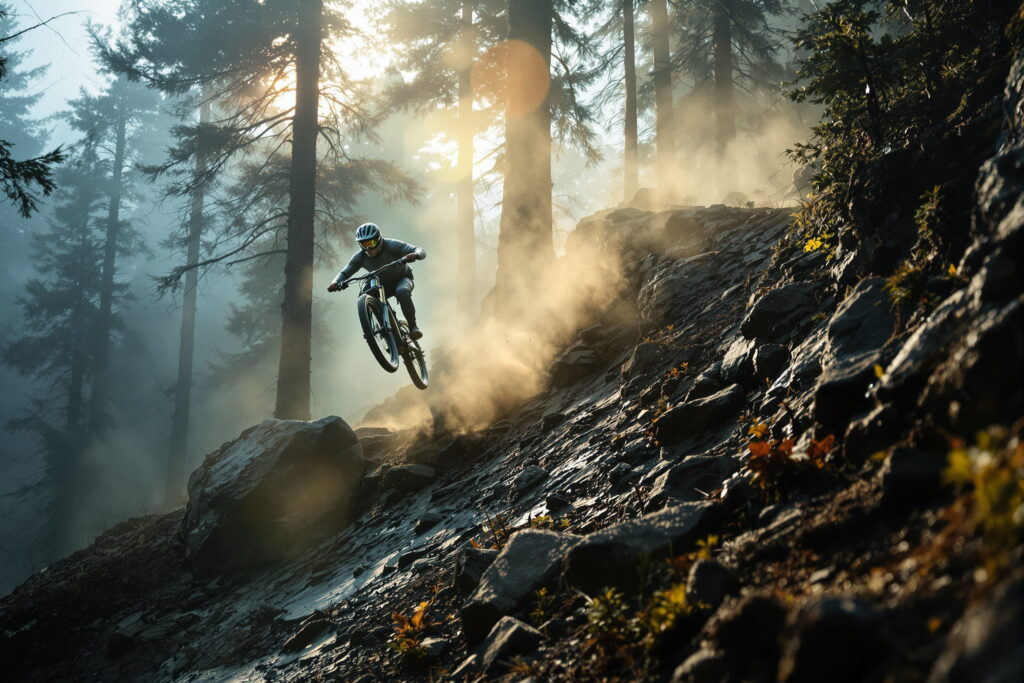
Align your body position by shifting weight back, allowing for better control on steep inclines. This technique keeps your front wheel from lifting and helps maintain traction.
Utilize your brakes effectively; avoid grabbing them impulsively. Instead, apply gradual pressure, especially on descents with loose terrain, to prevent skidding.
Anticipate upcoming obstacles. Look ahead to identify rocks, roots, and drops, adjusting your line before reaching them. This practice significantly reduces reaction time and enhances overall stability.
Practice cornering by leaning into turns while keeping your bike upright. This approach minimizes centrifugal force and improves grip, helping you maintain speed through curves.
Choose the right gear beforehand. Selecting a lower gear provides more torque, allowing for smoother power delivery and better pedaling efficiency when tackling challenging spots.
Regularly check your bike’s components, particularly the suspension and tires. Well-maintained equipment enhances performance and safety, making your rides far more enjoyable.
Maintaining Balance and Control on Steep Slopes
Shift your weight back when approaching a steep incline. This action prevents the front wheel from digging in and allows for better traction. Positioning yourself correctly helps maintain a controlled descent.
Keep your knees slightly bent and your elbows out. This stance enables quick reactions to changes in terrain, enhancing your ability to absorb shocks and maintain stability.
Use your core muscles. Engaging your core adds stability and control, allowing you to maneuver effectively. Tightening your abdomen grounds you, making it easier to navigate challenging slopes.
- Look ahead. Focus on the trail ahead instead of directly beneath your wheels. This approach allows for anticipatory adjustments, crucial for maintaining balance.
- Practice weight distribution. Experiment with shifting your weight forward and back to understand how it affects traction.
Brake progressively to maintain control. Sudden braking can lead to loss of balance, especially on steep descents. Instead, apply brakes gently to manage your speed smoothly.
- Stay relaxed. Tension in your body can lead to stiffness and loss of control. Relax your grip on the handlebars and keep your upper body loose.
- Experiment with line choice. Finding the optimal line through obstacles can significantly enhance your control while descending.
Lastly, practice consistently. Frequent riding on steep trails hones your balance and control skills. Consider starting on less steep areas to build confidence before tackling challenging slopes.
Choosing the Right Line for Safe Navigation
Select a path with the least resistance. Look for routes that avoid obstacles like rocks, roots, and tight corners. A smooth trajectory minimizes the risk of losing traction or control. Prioritize lines that allow for a natural flow, reducing the need for sudden braking or swerving, which can lead to accidents.
Assess the terrain before you descend. Identify key visual markers such as trees, boulders, or changes in elevation. These can guide your choice and help you anticipate upcoming challenges. Being aware of potential hazards ahead will enable you to react appropriately, keeping your descent safe and manageable.
Master braking techniques. Knowing how to modulate your brakes based on the line you choose plays a significant role in stability. If your route requires a sharp turn or steep drop, practice gentle braking to maintain bike control without skidding or tipping. Adjust your body positioning accordingly to keep your center of gravity balanced.
Lastly, always communicate with riding partners. A simple shout or signal can alert fellow riders to obstacles or changes in line. This awareness creates a safer environment, making it easier for everyone to navigate tricky sections of the path effectively. Stay focused on the trail while keeping an eye on your companions.
Braking Techniques for Optimal Speed Management
Begin braking earlier than you might instinctively choose to. Anticipate upcoming obstacles or turns by squeezing the levers softly before reaching them. This action softens the impact on your speed and allows for a smoother transition into corners.
Utilize both front and rear brakes selectively. The front brake provides superior stopping power, while the rear one aids stabilization. Practice applying them with a slight bias towards the front to enhance control without skidding.
Adjust your body position during braking. Lean back slightly to shift your weight rearward, maintaining traction on the rear wheel. This technique is particularly useful on steep inclines or loose surfaces, where maintaining balance becomes critical.
Incorporate modulation into your braking technique. Avoid abrupt stops that can lead to loss of traction. Instead, gradually increase pressure on the brakes, allowing for a more controlled deceleration that keeps your tires engaged with the ground.
Familiarize yourself with your bike’s braking points. Each setup behaves differently under various conditions, so practice finding your personal threshold before losing grip. Identify safe braking zones on familiar paths to improve timing and confidence.
Observe your line choice and adjust braking accordingly. If you’re headed for a corner, focus on minimizing brake application. Efficient speed management means balancing momentum while choosing the ideal trajectory to flow smoothly through turns.
Review terrain knowledge regularly. Different trail surfaces, such as wet rocks or loose gravel, will impact braking performance. Modify techniques based on conditions, ensuring your approach maximizes both speed and control in all environments.